Thailand
Bangkok
8 landmarks
The City of Angels — ornate temples, the Grand Palace, street food culture, and a river city that blends ancient tradition with neon-lit modernity.
Landmarks
0 / 8 visited
 Must-seeHistorical Architecture
Grand Palace
Built in 1782 and still the official residence of the Thai royal family, the Grand Palace complex covers 218,400 square meters and includes dozens of ornate buildings, halls, and temples. It remains the most visited site in Thailand and the spiritual heart of the nation.
 Must-seeReligious Site
Wat Phra Kaew
The Temple of the Emerald Buddha — Thailand's most sacred Buddhist temple, located within the Grand Palace complex. The Emerald Buddha, carved from a single piece of jade and standing just 66cm tall, is one of the most venerated objects in Thai Buddhism. The temple's decorations are extraordinarily lavish.
 Must-seeReligious Site
Wat Arun
The Temple of Dawn, rising 79 meters above the west bank of the Chao Phraya River, is one of Bangkok's most recognizable landmarks. Its central prang (spire) is encrusted with thousands of pieces of colorful Chinese porcelain that shimmer in the light — spectacular at sunrise and sunset.
 Religious Site
Wat Pho
Bangkok's oldest and largest temple, housing the famous Reclining Buddha — 46 meters long and 15 meters tall, covered in gold leaf. Wat Pho is also the birthplace of traditional Thai massage and was the first Thai university, teaching medicine, literature, and philosophy.
 Scenic View
Chao Phraya River
The 'River of Kings' flows through the heart of Bangkok, connecting historic temples, markets, and the old royal quarter. A river boat ride along the Chao Phraya at sunset — with Wat Arun lit against the sky — is one of the most iconic experiences in Thailand.
 Local Icon
Chatuchak Weekend Market
One of the world's largest weekend markets, with over 15,000 stalls spread across 35 acres. From antiques, clothing, and handicrafts to plants, food, and rare collectibles — Chatuchak attracts over 200,000 visitors every weekend. An essential Bangkok experience.
 Museum
Jim Thompson House
A compound of six traditional Thai houses assembled by American businessman Jim Thompson, who revived the Thai silk industry after WWII before mysteriously disappearing in 1967. The house displays his extraordinary collection of Asian art and antiques and remains one of Bangkok's most unique museums.
 Scenic View
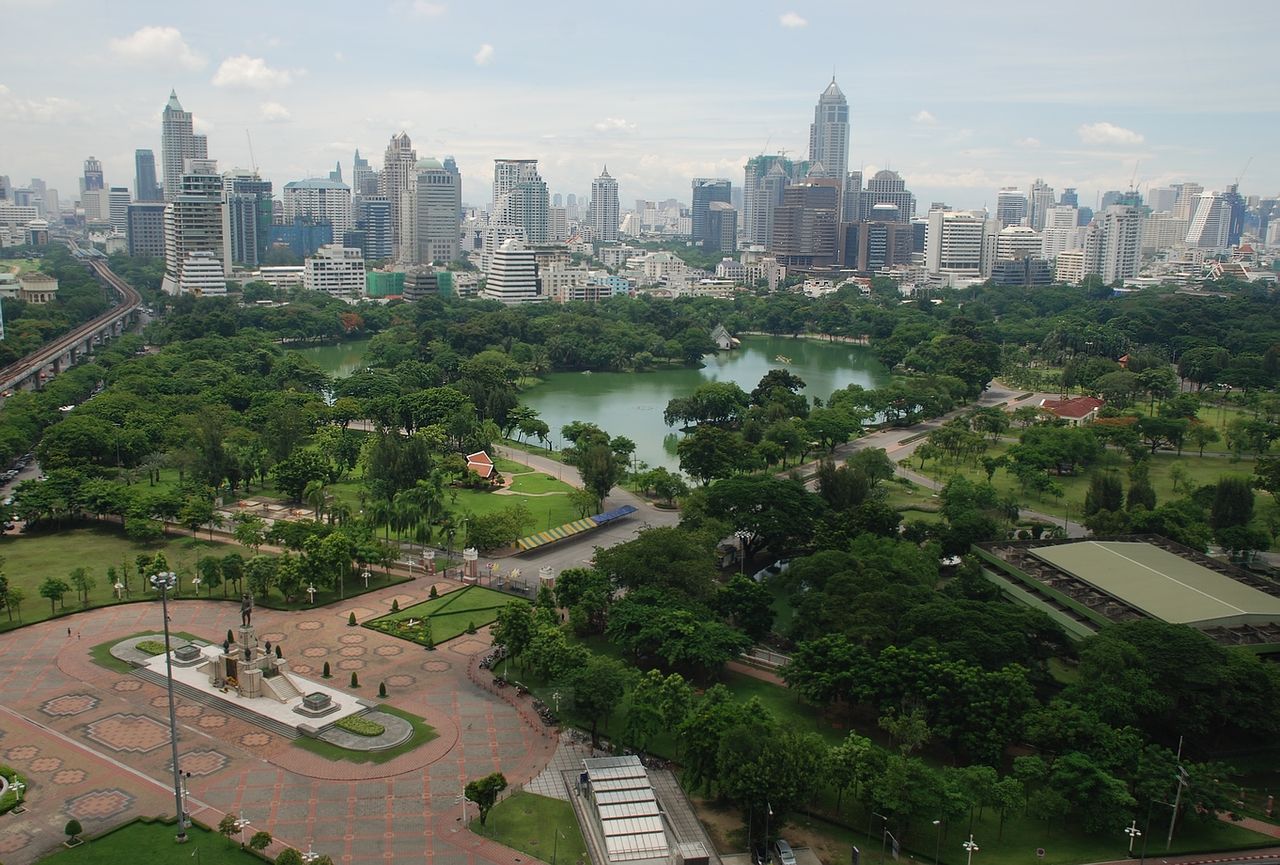
Lumphini Park
Bangkok's first public park, opened in 1925 and named after the birthplace of the Buddha in Nepal. Lumphini Park is a 142-acre urban oasis of lakes, lawns, and mature trees surrounded by skyscrapers — home to giant monitor lizards and a beloved retreat for Bangkokians.