France
Paris
10 landmarks2 UNESCO
The City of Light — the Eiffel Tower, world-class museums, Gothic cathedrals, and the most visited city on earth.
Landmarks
0 / 10 visited
 Must-seeCity Landmark
Eiffel Tower
Built in 1889 as the entrance arch for the World's Fair, the Eiffel Tower stands 330m tall and receives 7 million visitors a year — making it the most visited paid monument in the world.
 Must-seeMuseum
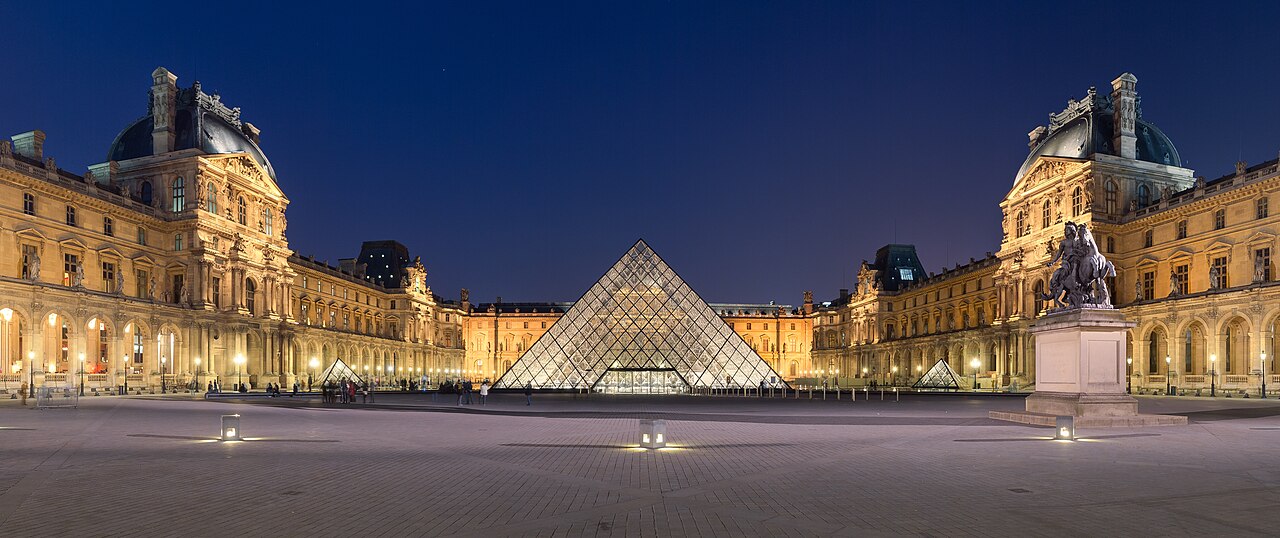
Louvre Museum
The world's largest art museum, home to 35,000 works including the Mona Lisa and Venus de Milo. Housed in a historic royal palace with I.M. Pei's iconic glass pyramid at its entrance.
 Must-seeUNESCOReligious Site
Notre-Dame Cathedral
A masterpiece of French Gothic architecture, built between 1163 and 1345. Severely damaged by fire in 2019, it is now undergoing historic restoration and reopened in December 2024.
 Must-seeUNESCOWorld Heritage
Palace of Versailles
The royal château of Louis XIV — the Sun King. Its Hall of Mirrors, formal gardens, and sheer scale (700 rooms, 2,000 acres of grounds) defined European royal architecture for generations.
 Must-seeCity Landmark
Arc de Triomphe
Commissioned by Napoleon in 1806 after the Battle of Austerlitz. Twelve avenues radiate from the arch, including the Champs-Élysées. The Tomb of the Unknown Soldier burns beneath it.
 Museum
Musée d'Orsay
Housed in a stunning Beaux-Arts railway station, this museum holds the world's largest collection of Impressionist and Post-Impressionist masterpieces — Monet, Renoir, Van Gogh, Degas.
 Religious Site
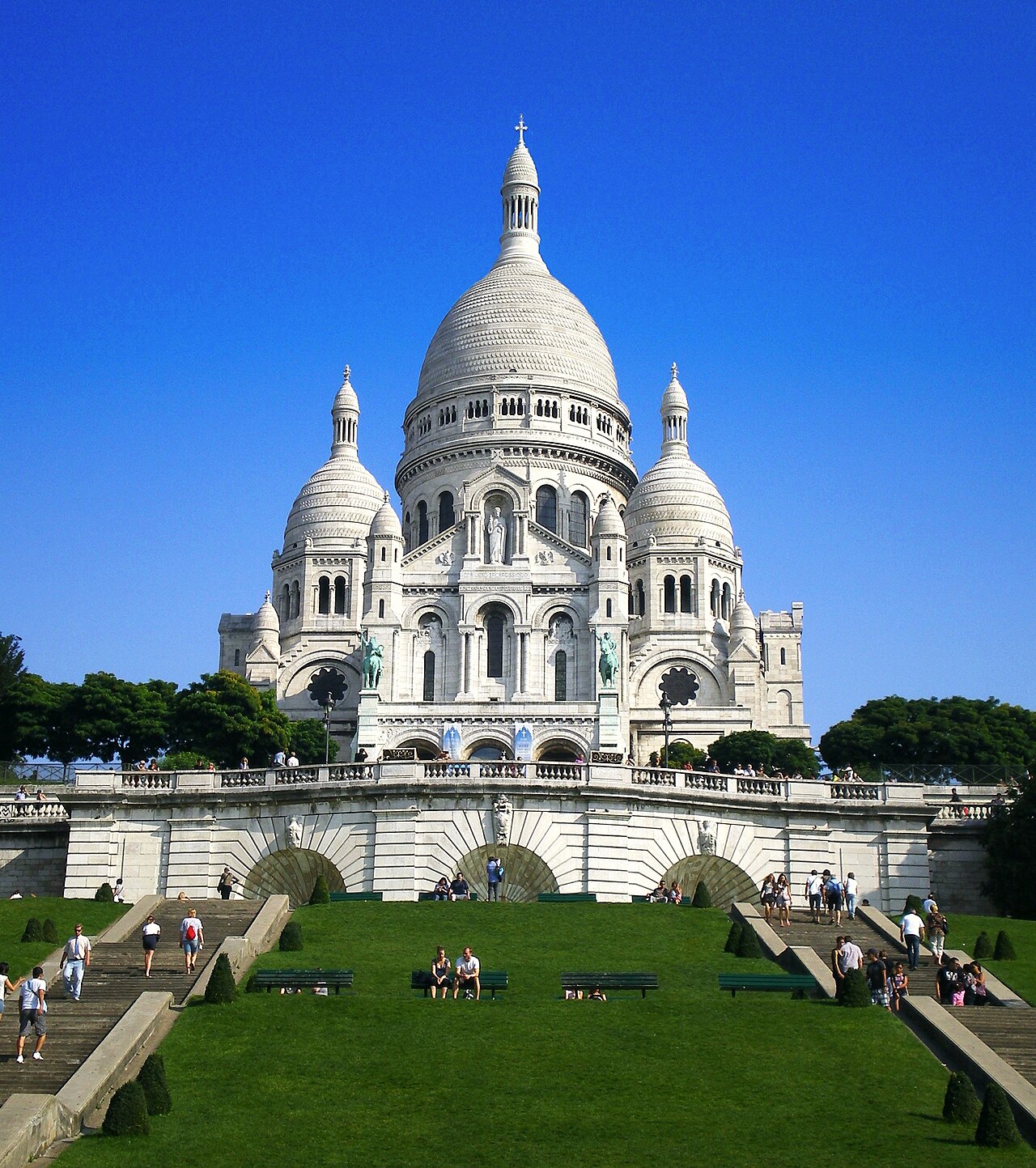
Sacré-Cœur Basilica
Perched atop Montmartre hill, this white Romano-Byzantine basilica offers one of the best panoramic views of Paris. Built between 1875 and 1914 as a votive offering after the Franco-Prussian War.
 Historical Architecture
Sainte-Chapelle
A royal chapel built in 1248 to house Christ's Crown of Thorns. Its 15 floor-to-ceiling stained glass windows — covering 600 square meters — are among the greatest achievements of medieval art.
 Museum
Centre Pompidou
Europe's largest modern art museum, famous for its inside-out architecture — color-coded pipes, ducts, and escalators on the exterior. The rooftop terrace offers exceptional views over Paris.
 Local Icon
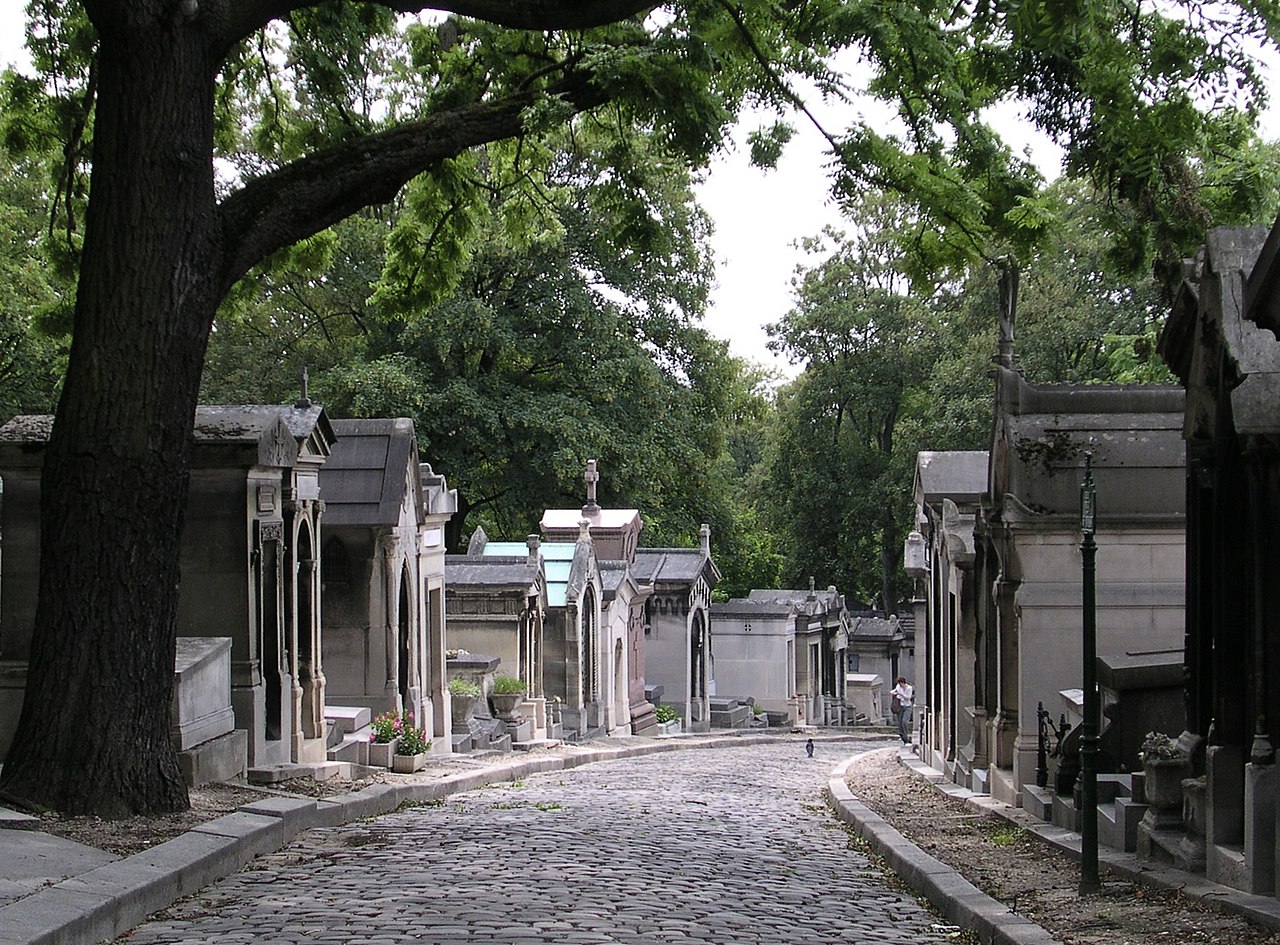
Père Lachaise Cemetery
The world's most visited cemetery. Chopin, Oscar Wilde, Édith Piaf, Marcel Proust, and Jim Morrison are buried here among 70,000 graves across 110 acres of tree-lined paths.