China
Beijing
7 landmarks4 UNESCO
China's imperial capital — the Forbidden City, the Great Wall, the Temple of Heaven, and 3,000 years of civilization on the edge of the North China Plain.
Landmarks
0 / 7 visited
 Must-seeUNESCOWorld Heritage
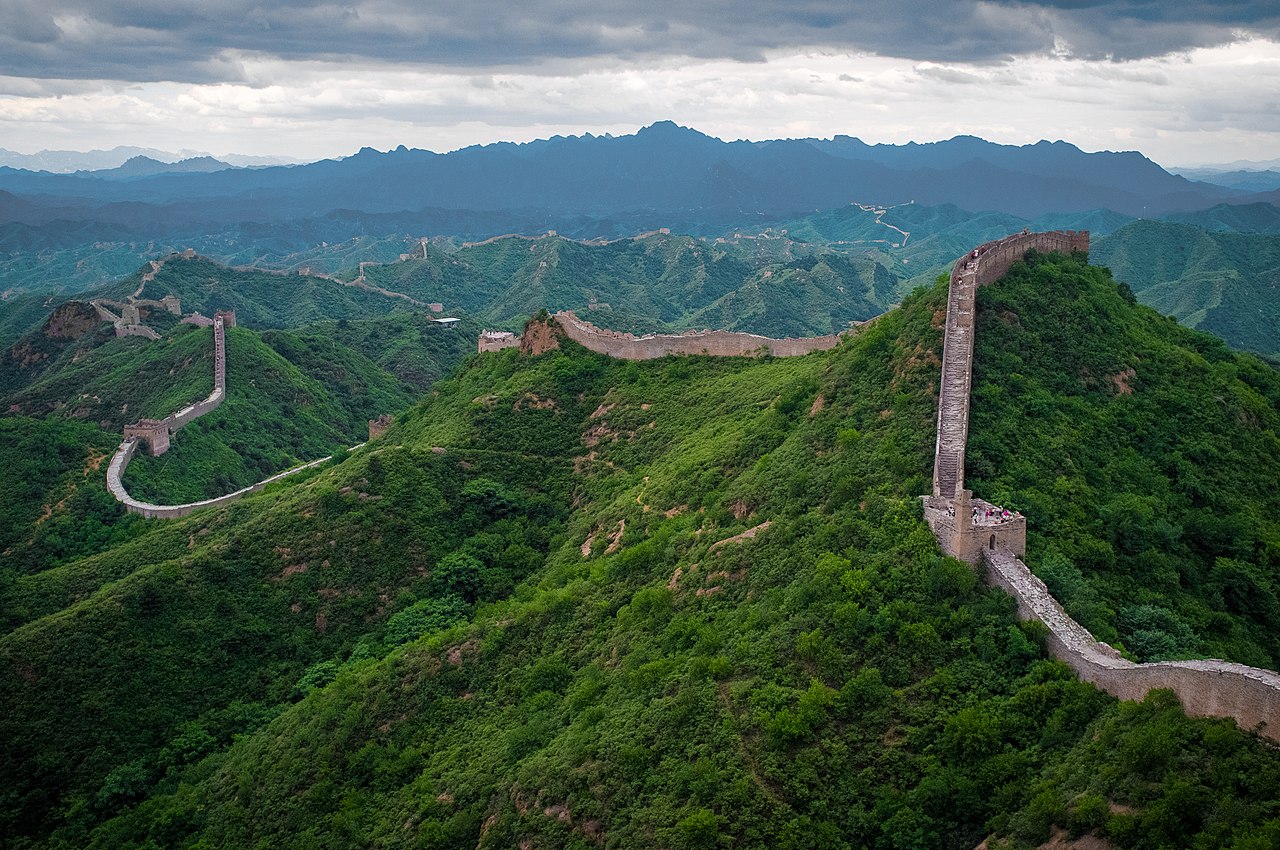
Great Wall of China
One of the most extraordinary constructions in human history — a network of fortifications stretching over 21,000 kilometers, built and rebuilt from the 7th century BCE through the 17th century CE. The most accessible section for visitors is Badaling, 80km from Beijing. A UNESCO World Heritage Site and one of the New Seven Wonders of the World.
 Must-seeUNESCOWorld Heritage
Forbidden City
The world's largest palace complex and a UNESCO World Heritage Site. Built between 1406 and 1420, the Forbidden City served as the imperial palace for 24 emperors over five centuries. Its 980 buildings and 8,728 rooms were forbidden to ordinary people for 500 years — today it is China's most visited museum.
 Must-seeCity Landmark
Tiananmen Square
One of the world's largest public squares, covering 440,000 square meters in the heart of Beijing. Flanked by the Forbidden City gate, the Great Hall of the People, and Mao's Mausoleum, Tiananmen Square has witnessed pivotal moments of Chinese history. The daily sunrise flag-raising ceremony draws enormous crowds.
 Must-seeUNESCOWorld Heritage
Temple of Heaven
A masterpiece of Ming dynasty architecture (1420 CE) where Chinese emperors annually offered prayers to heaven for good harvests. The circular Hall of Prayer for Good Harvests — with its triple blue-tiled roof — is one of the most recognized architectural icons of China. Set in a vast park full of tai chi practitioners. UNESCO World Heritage Site.
 UNESCOWorld Heritage
Summer Palace
The largest and best-preserved imperial garden in China — a UNESCO World Heritage Site of lakes, gardens, palaces, and pavilions covering 290 hectares. Built in 1750 for Emperor Qianlong and largely destroyed by Anglo-French forces in 1860 before being rebuilt, the Summer Palace centers on Kunming Lake.
 Local Icon
Beijing Hutong
The ancient network of narrow alleys and traditional courtyard residences (siheyuan) that formed the fabric of old Beijing. Many hutong neighborhoods have survived the city's rapid modernization, offering a glimpse of daily life unchanged for centuries. The best are around Houhai Lake and the Drum Tower.
 Historical Architecture
Drum Tower & Bell Tower
Two towers built in 1272 that served as Beijing's official timekeepers for 700 years. Drums were beaten every two hours in the Drum Tower; the bell in the Bell Tower signaled the opening and closing of the city gates. Together they anchor the historic north-south axis of old Beijing.