Mexico
Mexico City
7 landmarks4 UNESCO
One of the world's great megalopolises — built on the ruins of Tenochtitlán, with pyramids, Aztec temples, Diego Rivera murals, and Frida Kahlo's blue house.
Landmarks
0 / 7 visited
 Must-seeUNESCOWorld Heritage
Teotihuacán
Once the largest city in the pre-Columbian Americas, Teotihuacán was home to 150,000 people around 500 CE. The UNESCO World Heritage Site features the massive Pyramid of the Sun (third-largest pyramid in the world), the Pyramid of the Moon, and the Avenue of the Dead — an ancient city of extraordinary scale and ambition, 50km from Mexico City.
 Must-seeUNESCOCity Landmark
Zócalo (Plaza de la Constitución)
One of the largest public squares in the world, the Zócalo has been the center of Mexican life for 700 years — first as the heart of the Aztec capital Tenochtitlán, then as the Spanish colonial plaza. Surrounded by the Metropolitan Cathedral, the National Palace (with Diego Rivera murals), and government buildings, it remains the symbolic center of Mexico.
 Must-seeMuseum
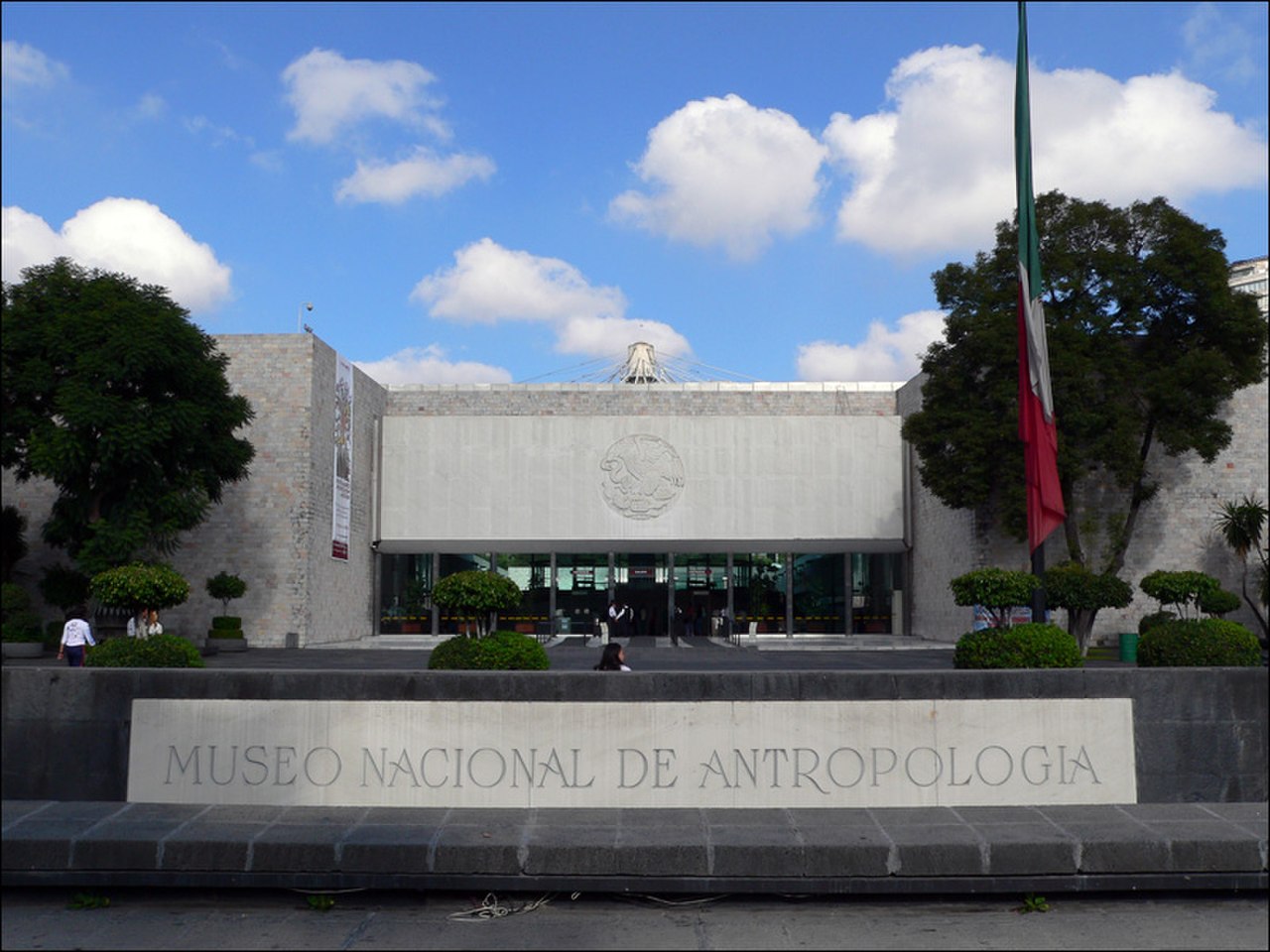
National Museum of Anthropology
One of the greatest museums in the world, housing the finest collection of pre-Columbian artifacts in existence. The Aztec Sun Stone (incorrectly called the 'calendar stone'), the jade mask of Pakal, the Aztec Eagle Warrior — all housed in a magnificent 1964 building by Pedro Ramírez Vázquez with a central umbrella fountain.
 Must-seeUNESCOWorld Heritage
Templo Mayor
The great temple of the Aztec capital Tenochtitlán, discovered beneath Mexico City's historic center in 1978. The partially excavated ruins of the Templo Mayor — the spiritual heart of the Aztec Empire — stand alongside a world-class museum displaying over 7,000 ritual objects including the Moon Disc of Tlaltecuhtli.
 Museum
Frida Kahlo Museum
La Casa Azul (the Blue House) in the Coyoacán district where Frida Kahlo was born, lived most of her life, and died in 1954. Preserved exactly as she left it, the museum displays her paintings, clothing, jewelry, and personal possessions — an intimate portrait of one of the 20th century's most iconic artists.
 UNESCOWorld Heritage
Xochimilco
The last remnants of the Aztec lake system that once covered the Valley of Mexico. Xochimilco's canal network — navigated by colorfully decorated flat-bottomed boats (trajineras) — was a UNESCO World Heritage Site in 1987. The 'floating gardens' (chinampas) have been cultivated here for 1,000 years.
 Historical Architecture
Chapultepec Castle
Mexico's only royal castle, built on a hill in Chapultepec Park and home to Mexico's last emperor Maximilian I and later presidents. Now the National Museum of History, the castle's terrace offers sweeping views over Mexico City, and its interior retains the magnificent painted murals and stained glass of the imperial era.