Austria
Vienna
7 landmarks3 UNESCO
The Imperial City — Schönbrunn Palace, the Kunsthistorisches Museum, Klimt's 'The Kiss', world-class opera, and the grand boulevards of the Habsburgs.
Landmarks
0 / 7 visited
 Must-seeUNESCOWorld Heritage
Schönbrunn Palace
The Habsburg emperors' summer residence — a UNESCO World Heritage Site of 1,441 rooms, magnificent Baroque gardens, and a hilltop Gloriette pavilion with panoramic views over Vienna. Mozart performed here at age 6 for Empress Maria Theresa. The most visited tourist attraction in Austria.
 Must-seeHistorical Architecture
St. Stephen's Cathedral
Vienna's Gothic masterpiece and its most beloved symbol. The Stephansdom rises 136 meters above the Stephansplatz and has stood at the heart of Vienna since the 12th century. Its spectacular polychrome tile roof, 343-step South Tower, and catacombs beneath make it the defining monument of the city.
 Must-seeUNESCOWorld Heritage
Hofburg Palace
The Imperial Palace of the Habsburg dynasty — a 2,600-room complex in the heart of Vienna that served as the winter residence of Austrian emperors for 700 years. Now part of a UNESCO World Heritage Site, it houses the Imperial Apartments, the Sisi Museum, the Imperial Silver Collection, and the Spanish Riding School.
 Must-seeUNESCOWorld Heritage
Belvedere Palace
A Baroque palace complex (1716–1723) now housing Austria's premier art collection. The Upper Belvedere contains Gustav Klimt's iconic 'The Kiss' (1908) alongside masterworks of Austrian Biedermeier and Viennese Secession painting. The formal gardens linking the Upper and Lower palaces are among Europe's finest Baroque gardens.
 Must-seeMuseum
Kunsthistorisches Museum
Built in 1891 to house the Habsburg imperial art collection, the KHM contains one of the world's greatest collections of Old Master paintings — the largest Bruegel collection in the world, works by Raphael, Titian, Vermeer, Caravaggio, and Dürer — all displayed in a magnificent Renaissance Revival building.
 City Landmark
Vienna State Opera
One of the world's leading opera houses, opened in 1869 with Mozart's Don Giovanni and rebuilt after WWII bomb damage. The Vienna Philharmonic draws its members from the State Opera Orchestra. Standing-room tickets (Stehplätze) are available for a few euros — making one of the world's great musical institutions accessible to all.
 Local Icon
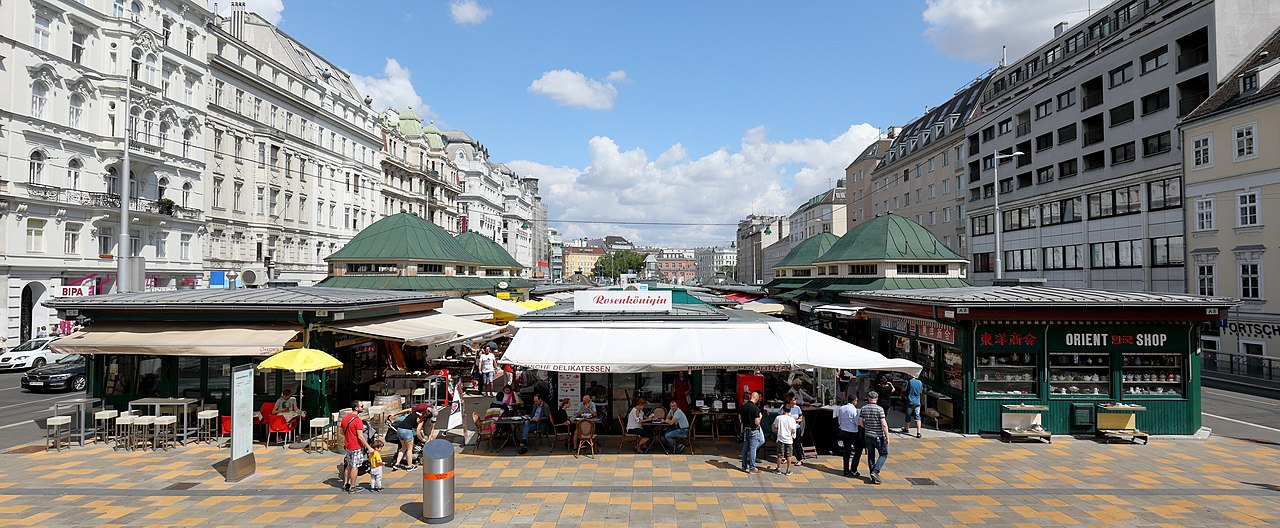
Naschmarkt
Vienna's most celebrated open-air market, stretching 1.5km along the Wienzeile. Since the 16th century, the Naschmarkt has been where Viennese buy fresh produce, cheeses, spices, and street food from over 120 stalls — Saturday mornings add an antiques and flea market, making it the city's best people-watching spot.